This post covers the two families of crystal glass switches we supply, standard touch switches and smart switches, explains the wiring each one needs, and gives practical tips for new builds and for older homes that have no neutral wire at the switch.
Standard touch switches
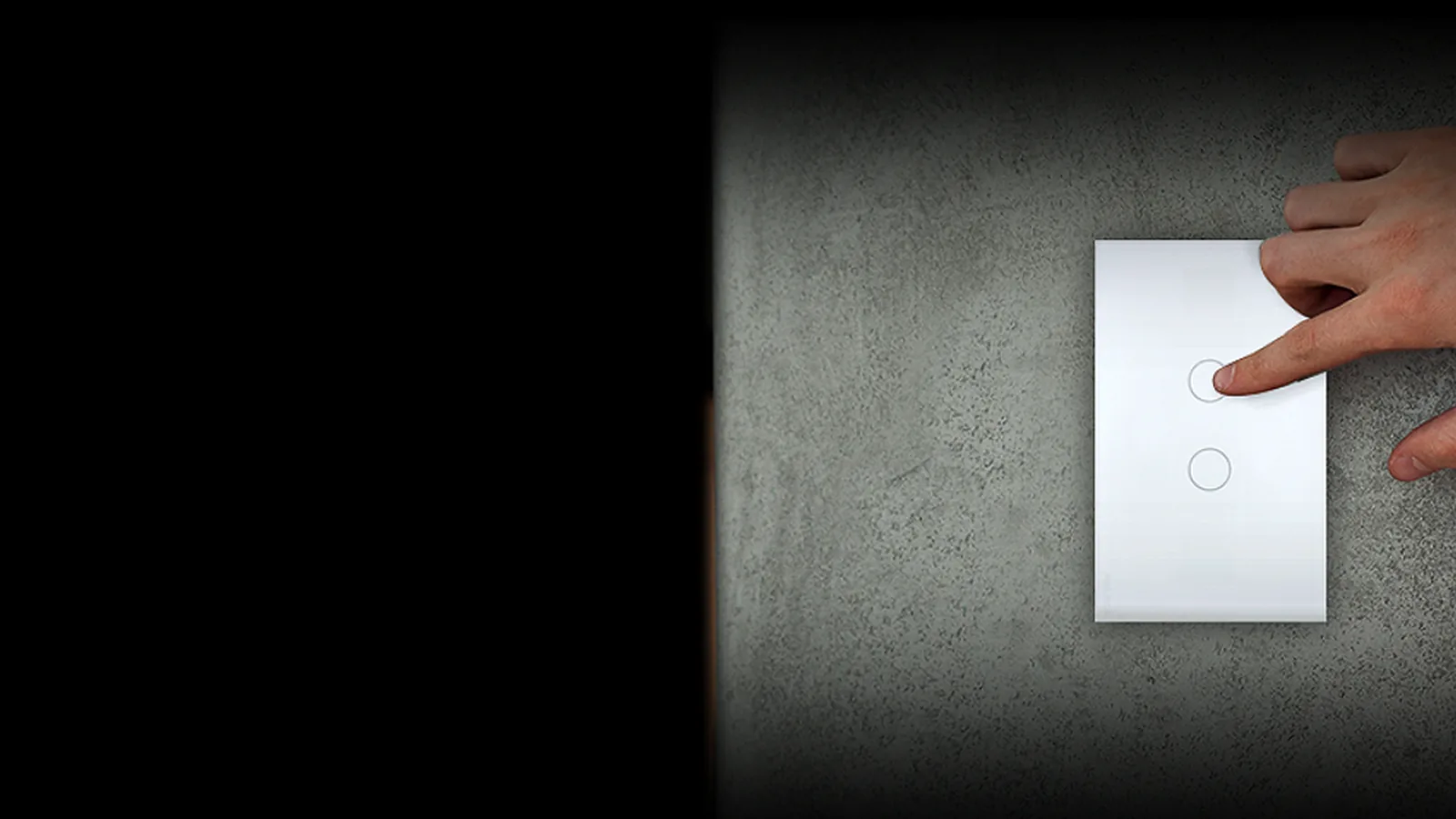
Standard touch switches replace an ordinary mechanical switch and are powered through the switched live wire alone, which makes them the simplest option to retrofit.
- Standard touch switches are single-wire and do not require a neutral.
- Available in 1, 2, 3 and 4 gang switches.
- Two-way switching is available in 1, 2 and 3 gangs, using standard communication wiring. 2 x two-way switches will be required (any number of gangs) and these are paired electronically after installation.
- Dimmer and non-dimmer switches on 1 plate are not available.
- 1, 2 and 3 gang dimmers are available, but all lights on the dimmer must be dimmable.
- With single wiring on electronic switches there can be interference from lighting circuits, and 1 x load correction device on the circuit (normally installed in the first socket) may be required.
- Load correction devices can assist with dimming and with residual current, which causes some LED globes to glow faintly when switched off.
- Smart lights require a load correction device on the circuit. This assists with stability and maintains the live circuit when the lights are being controlled through the app.
The reason for the load correction device is that a single-wire switch has to draw a tiny current through the light fitting to power its own electronics. LED fittings draw so little current that this can cause flicker or glow; the load correction device gives the circuit a stable path and removes the problem.
Smart switches
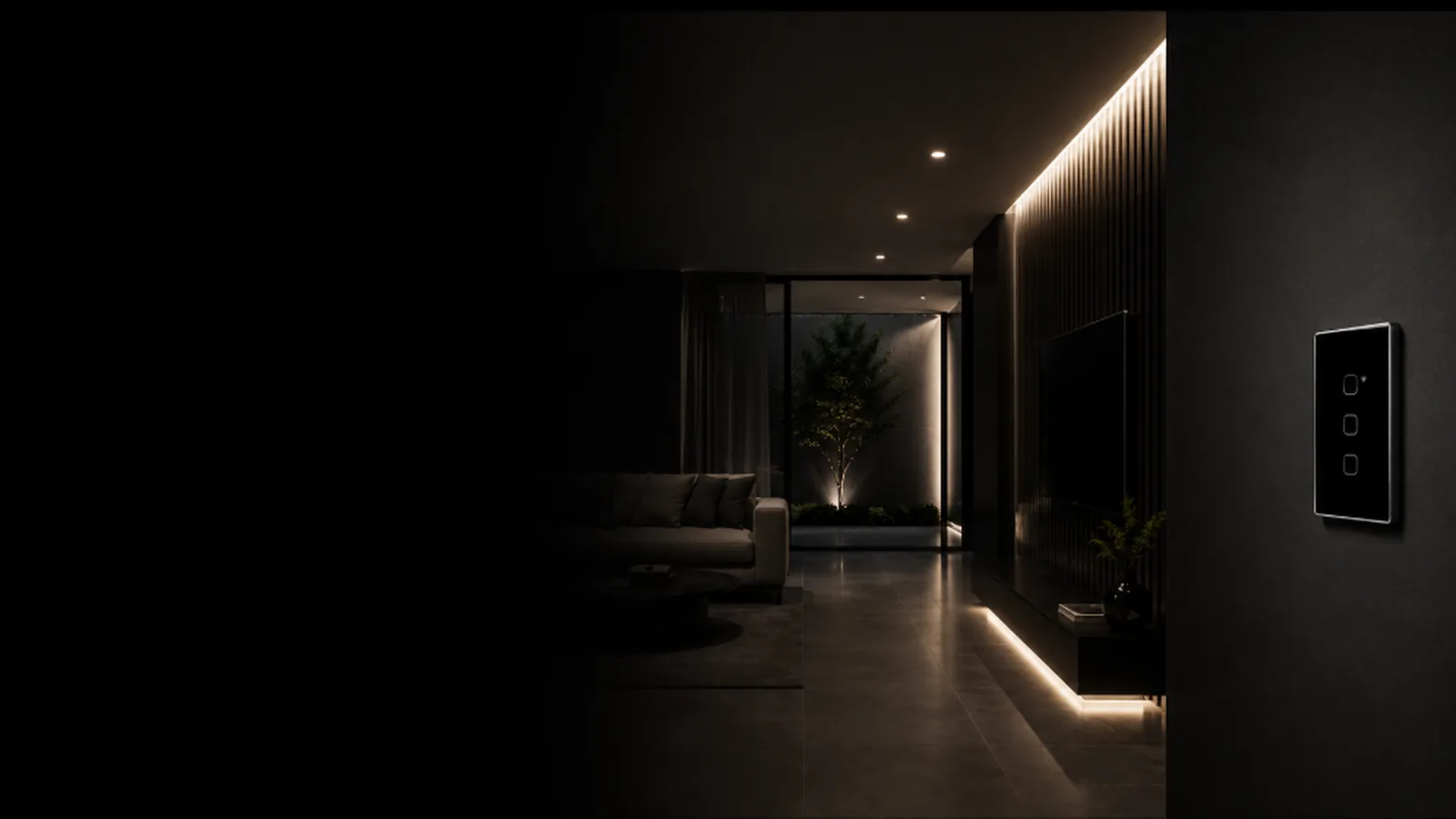
Smart switches carry a Wi-Fi or Bluetooth module and connect to the Smart Life app, so they can be controlled and automated as well as touched.
- Smart switches require neutral wires.
- 1, 2, 3 and 4 gang switches are available.
- Curtain and blind switches are available.
- 1 gang dimmable switches are available.
- Smart switches are more stable because they are wired to neutral. Load correction devices are not required.
- Smart switches can be linked to do 2-way and 3-way switching with no additional wiring.
- Smart switches can be switched ON and OFF remotely with smart devices and can work with sensors, cameras, Alexa, Google Assistant and similar platforms.
- Smart switches can also be linked to remote sockets or switches with no wiring.
Tips for planning your switches
- When building a new Smart Home Perth, always allow for neutral wires or conduits wherever you may require a smart switch. It costs very little at the framing stage and a great deal after the walls are finished.
- Smart switches are very useful at the front door, as security cameras can be linked to switches on lights for convenience and safety at no extra cost.
- Smart switches can also enable you to add gangs and link to other switches, garden lights and so on with no extra cabling.
- Smart switches can be combined with standard switches as they look and feel the same. This will save costs, as smart switches are not really required in most applications. A sensible approach is a smart switch at the entry, living area and outdoor lights, with standard touch switches in bedrooms and bathrooms.
What to do if you have no neutral wires or conduits
Many established Perth homes have only the switched live wires at the switch position. There are still several ways an electrician can get a neutral to the switch, or work around the lack of one:
- Electricians can often add a neutral wire to switches on external walls, as these are frequently double brick with a cavity between the leaves.
- Neutral wires can be added if there is a garage, cupboard or area behind the switch wall that will not be affected by running an external conduit.
- Two-way cabling can be converted to a neutral, with correct testing and heat-shrinking the exposed cable ends to blue.
- Circuits can be combined, and the extra cable converted to a neutral.
- Remember that extra switches can be added using smart receivers or sockets without any wiring.
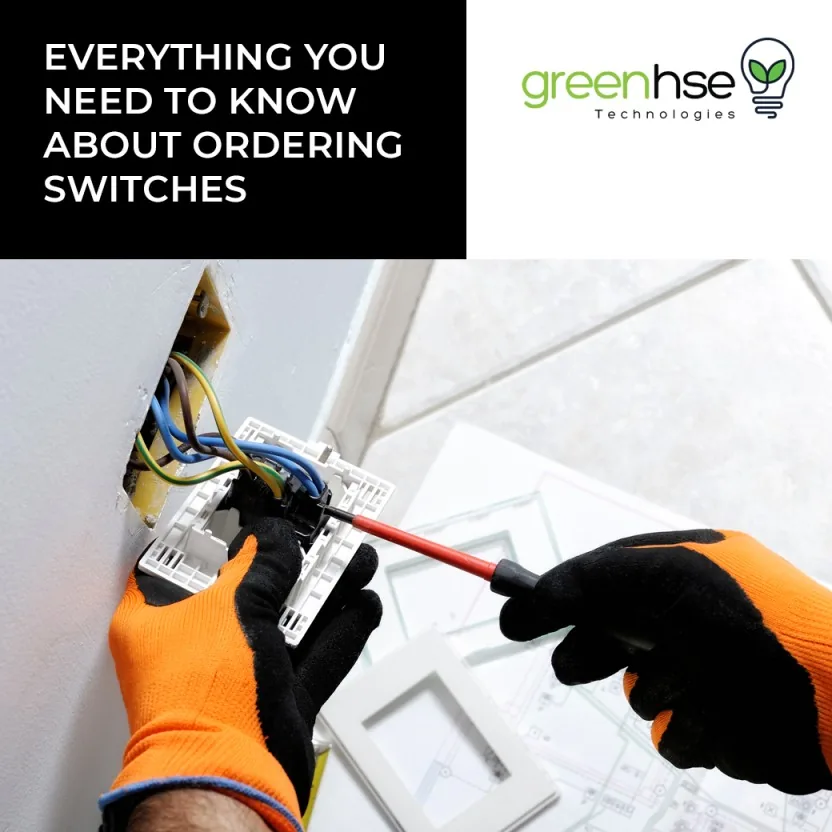
All of this work involves 240V wiring and must be carried out and tested by a licensed electrician. The options above are for discussion with your electrician, not for DIY.
Ordering your switches
Before you order, it helps to have a simple list for each switch position: how many gangs, whether it needs dimming, whether it is part of a two-way or three-way group, and whether a neutral is available. With that list, choosing between a standard touch plate and a smart plate at each location is straightforward.
After reading this, order your smart switches requirement today so that one of our Greenhse experts or recommended electricians can assist you further. Please note we can only supply recommendations, and it is advisable to discuss your options with your electrician and for them to call us direct. Greenhse Technologies is at 5/1 Locke Lane, Ellenbrook WA 6069, Perth, and can be reached on (08) 9297 2969.
Shop the range