Strip lighting can create the most attractive lighting in a home or commercial property if it is done correctly. There are so many different styles, outputs and colours that selection can be difficult. This article covers everything you need to know about strip lighting: brightness, LEDs per metre, colour, IP rating, controllers, aluminium channels and run lengths, so you can choose the right strip for kitchens, bathrooms, joinery and feature areas.
Brightness
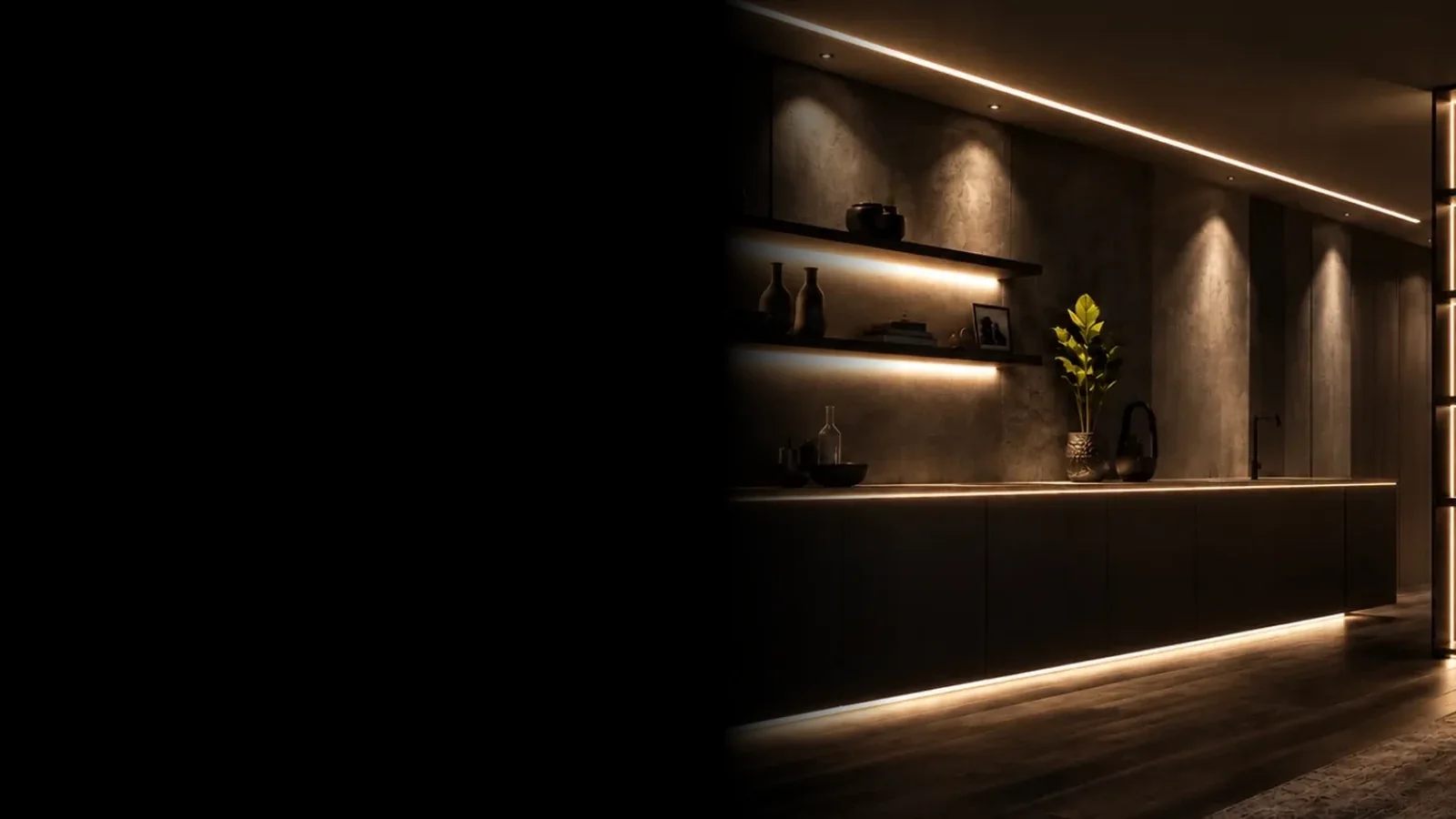
Strip lights can produce anywhere between 100 lumens per metre and 3000 lumens per metre on a single row of strip. For comparison, a light bulb or downlight produces close to 1000 lumens. If you are using strip light to light up a kitchen bench, bathroom basin or make-up area, high lumens are very important because the strip is doing task lighting. For decorative areas such as under a floating vanity, along a bulkhead or behind a TV, lower lumens are more suitable and more comfortable.
LEDs per metre and the dot effect
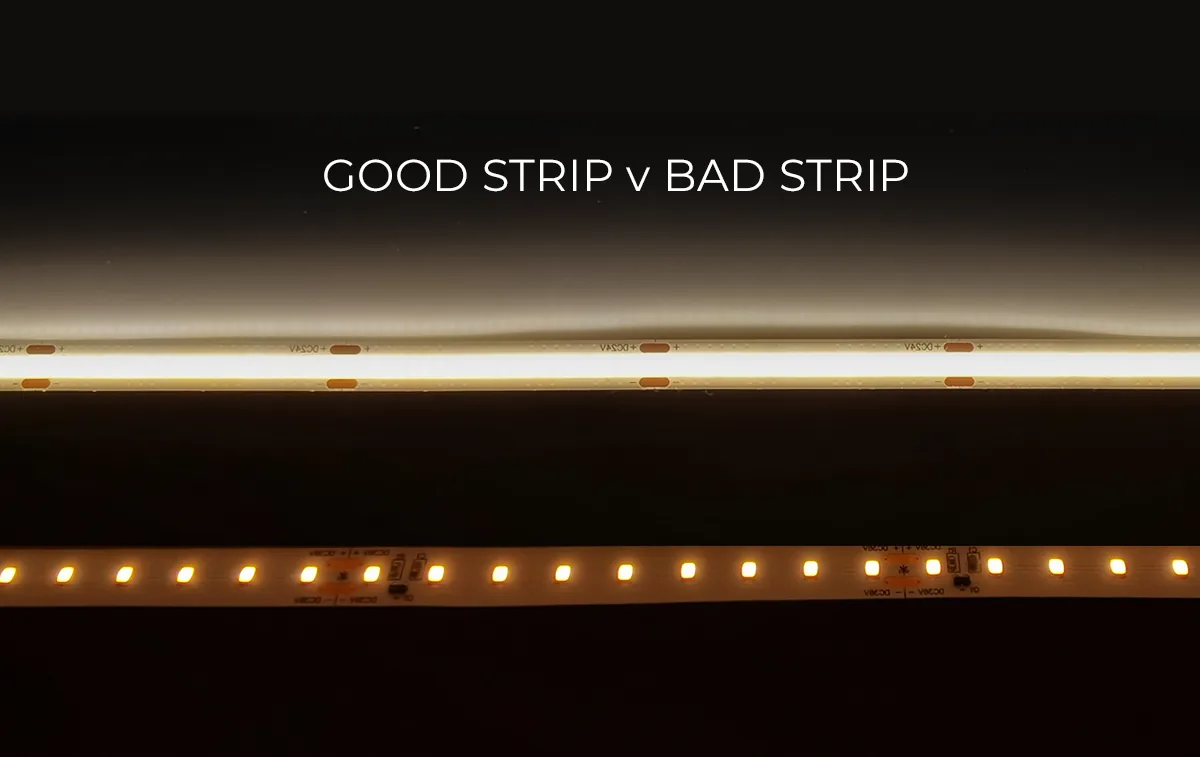
Higher lumen strip normally has more LEDs per metre, typically 190 to 240, which gives bright and even distribution up to 3000 lumens per metre. Many lower output strips have LEDs spaced out at 30 to 60 LEDs per metre, which look uneven and unattractive, especially through a diffuser, because you can see each individual point of light. This is known as the dot effect.
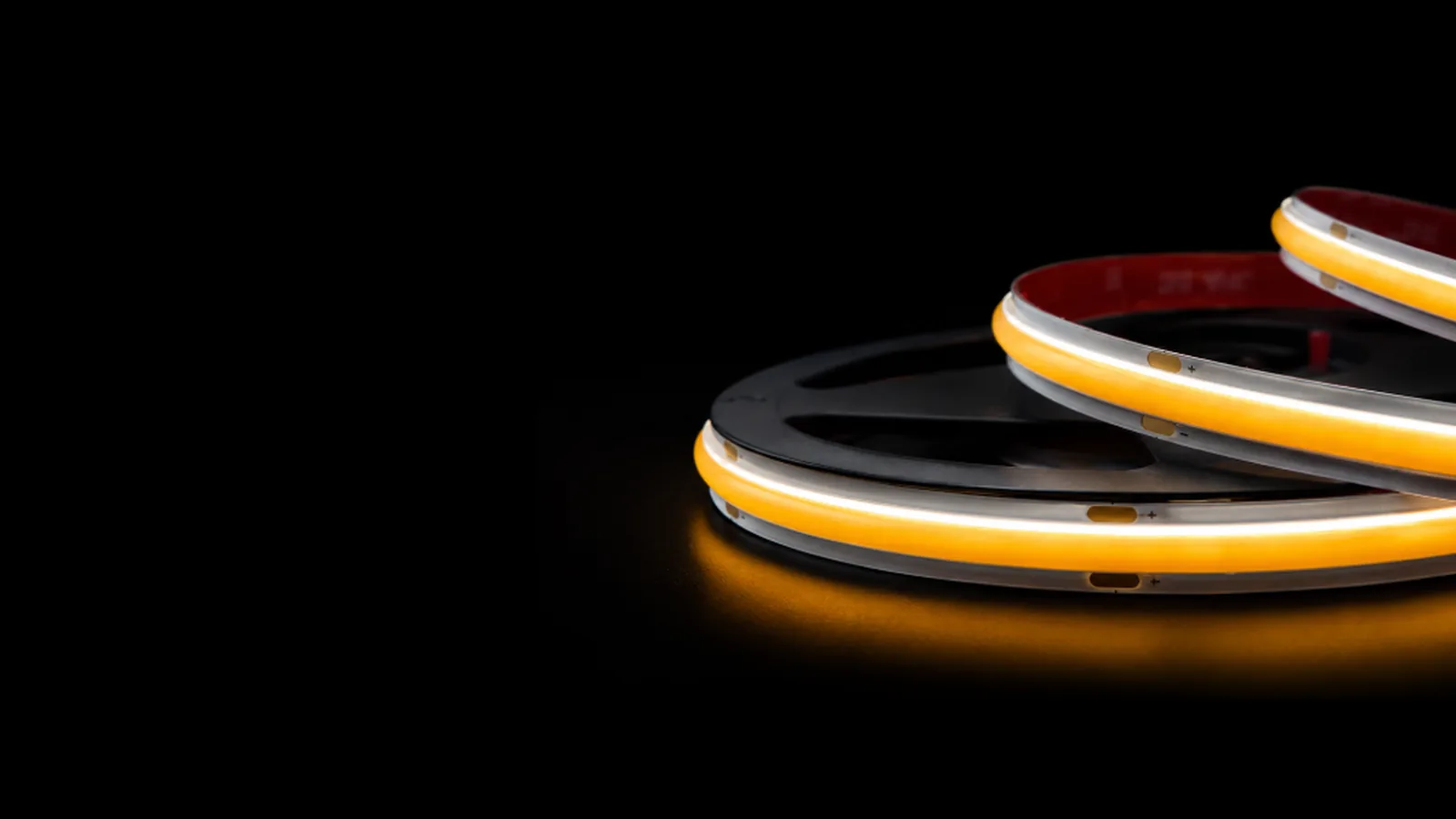
A new COB strip light is the best solution for lower lumen applications. COB (chip on board) strip is a continuous line of light with no dots, which is very attractive, yet it still delivers 1200 lumens per metre with lower power requirements.
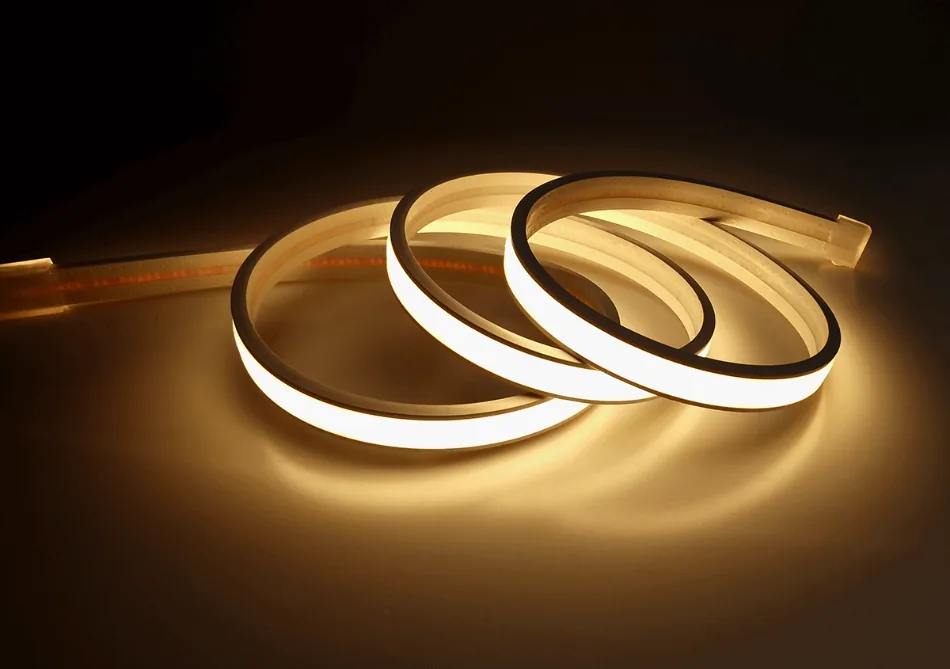
Pictured: 24V COB 4000K IP65 strip.
Colour
Colour can change the complete appearance of a space. Not only full colour RGB (red, green, blue), but even the white selection, from 2700K warm white to 6400K cool white, makes a big difference. Warm white feels cosy and suits living areas and bedrooms, natural white suits kitchens and bathrooms, and cool white suits workshops and commercial fit-outs.
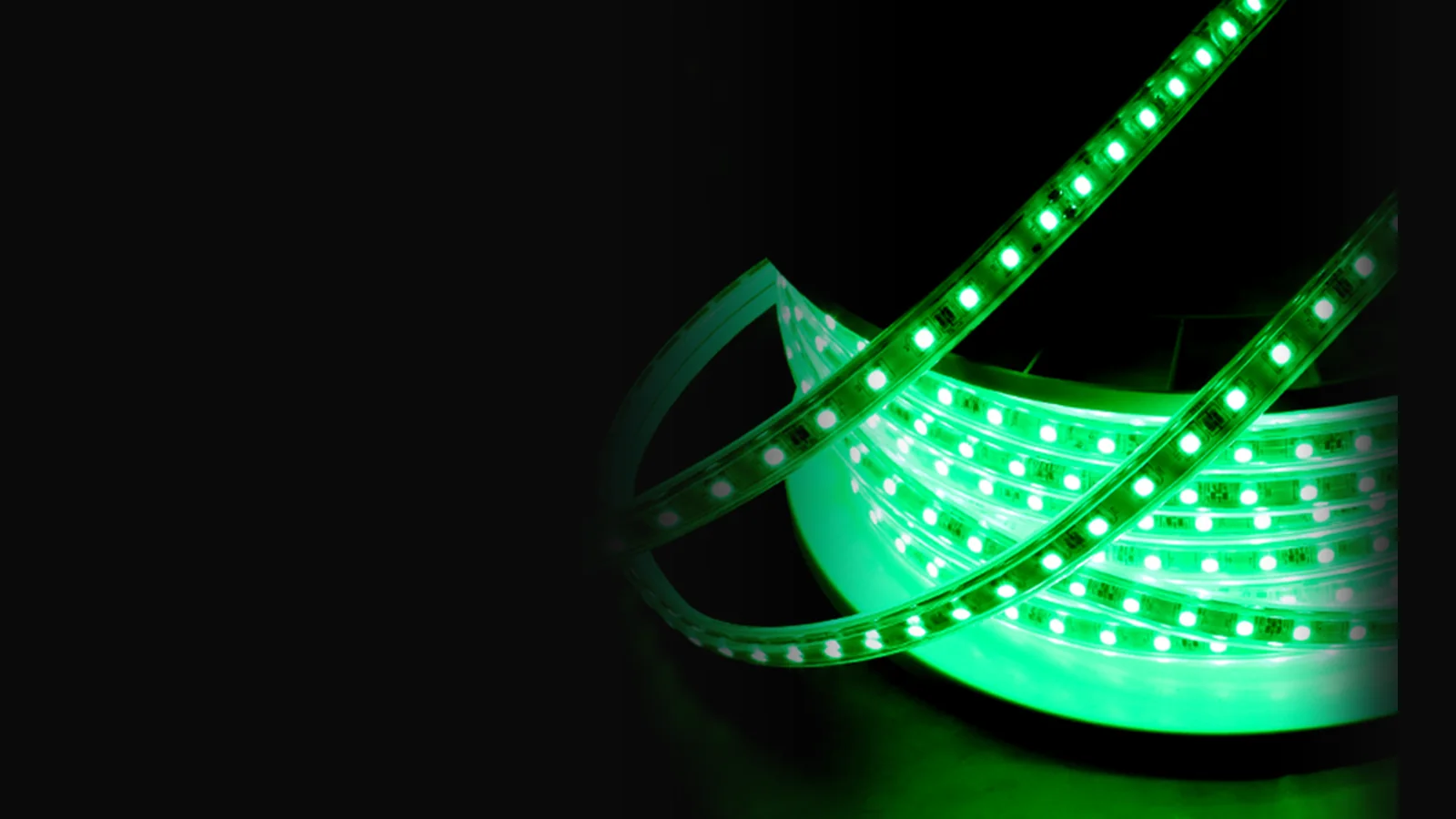
Strip light is available in single colour, in warm, natural or bright white, as well as CCT adjustable, which lets you select your exact colour temperature and brightness from a remote or app. CCT adjustable strip is also available in COB, which is dotless and very attractive.
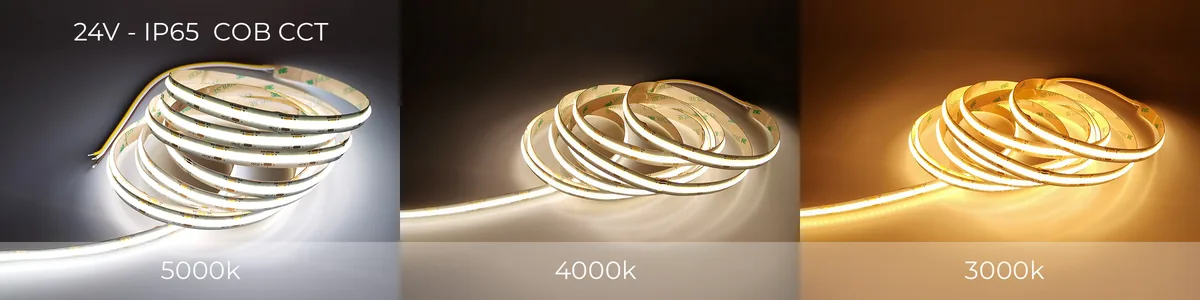
Pictured: 24V COB single colours in warm, natural and bright white.
IP rating
If strip light is being used in wet areas or places with high moisture content, IP65 is required. A silicon gel coating covers and protects the LED chips and connections. Even in dry areas the silicon gel is useful for adding extra strength and protection against knocks and dust.
Note: when choosing single colour strip light, ensure the output colour is correct, because the gel coating changes the LED colour. A 3000K LED with gel coating gives a cooler 3800K appearance, so confirm the finished colour rather than the bare chip colour.
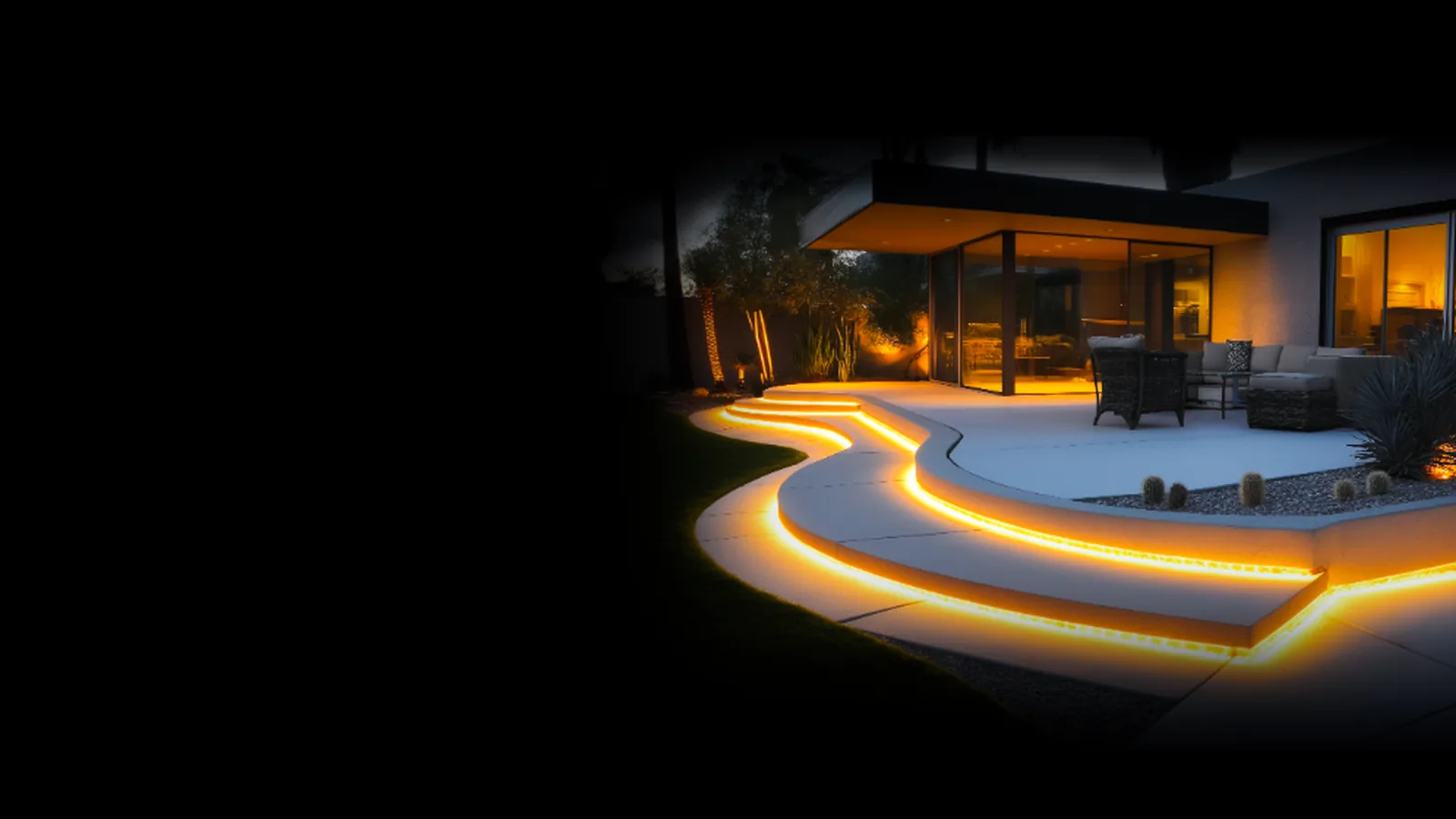
For outdoors, IP65 can work, but with time and erosive elements including UV and rain the strip light will not last. A silicon sleeve with gel injected inside gives a much more durable product with an IP68 rating, and is the right choice for exposed outdoor runs.
Controllers
Various controllers are available and the strip type decides what you need.
- Single colour strips do not need a controller. However, a dimming module is useful for setting the brightness level and turning the strip on and off with a remote or smart device, including Google and Alexa.
- CCT strips require a controller for setting the colour temperature and brightness level.
- RGB strips require a controller for setting the colour selection and brightness.
Controllers work with hand or wall remotes and also provide options for smart phones and voice activation through Google or Alexa. Controllers can be linked wirelessly to switches, sensors or cameras, adding convenient automation options such as a kickboard strip that comes on when the kitchen sensor detects movement at night.
Channel
Aluminium channels are often required to complete an installation. They hold the strip straight, draw heat away from the LEDs and give a finished, professional look. Recess wing channels are normally recessed into cabinetry, while rectangular and thin channels can be added as a retrofit if recesses cannot be made. Channels are usually available in silver aluminium, but black and white profiles are now also available in some styles. The channels have 15% to 20% diffusers, which hide the strip and help diffuse the light further.
Length
24-volt strip lights are available in lengths up to 10 metres and can be cut in increments of 5cm. When placing a strip, make sure the cut end is flush with the end of the channel or application. The wired end can be bent into a 12mm hole at the end, ensuring the strip reaches end to end with no gap in the light.
Up to 2 x 10 metre lengths can be run from 1 controller, increasing the total length to 20 metres. By adding transformers, longer runs can be achieved. Size the transformer to the strip wattage per metre multiplied by the total length, with some spare capacity.
12-volt strip lighting runs a lot hotter than 24-volt strip and is limited to 5 metre lengths before the far end noticeably dims. Due to the extra heat, 12V strip also tends to have a much shorter lifespan, which is why 24V is the standard for quality installations.
To see the product in action, watch the video GH 24V COB Professional Strip Lighting on our website.
Choosing the right lumens, colour, IP rating, controller and channel up front is what separates a stunning strip light installation from a disappointing one. Greenhse Technologies in Perth stocks 24V COB, CCT and RGB strip, controllers and aluminium channels. Visit the showroom at 5/1 Locke Lane, Ellenbrook WA 6069 or call (08) 9297 2969 to plan your strip lighting project.
Shop the range